Aprende Institute · Lead form redesign
A shorter first step generated 35% more qualified leads.
The original form asked for seven fields and sales consent before providing program information. We split the journey by intent and kept sales-qualified conversion stable.
01 · The mismatch
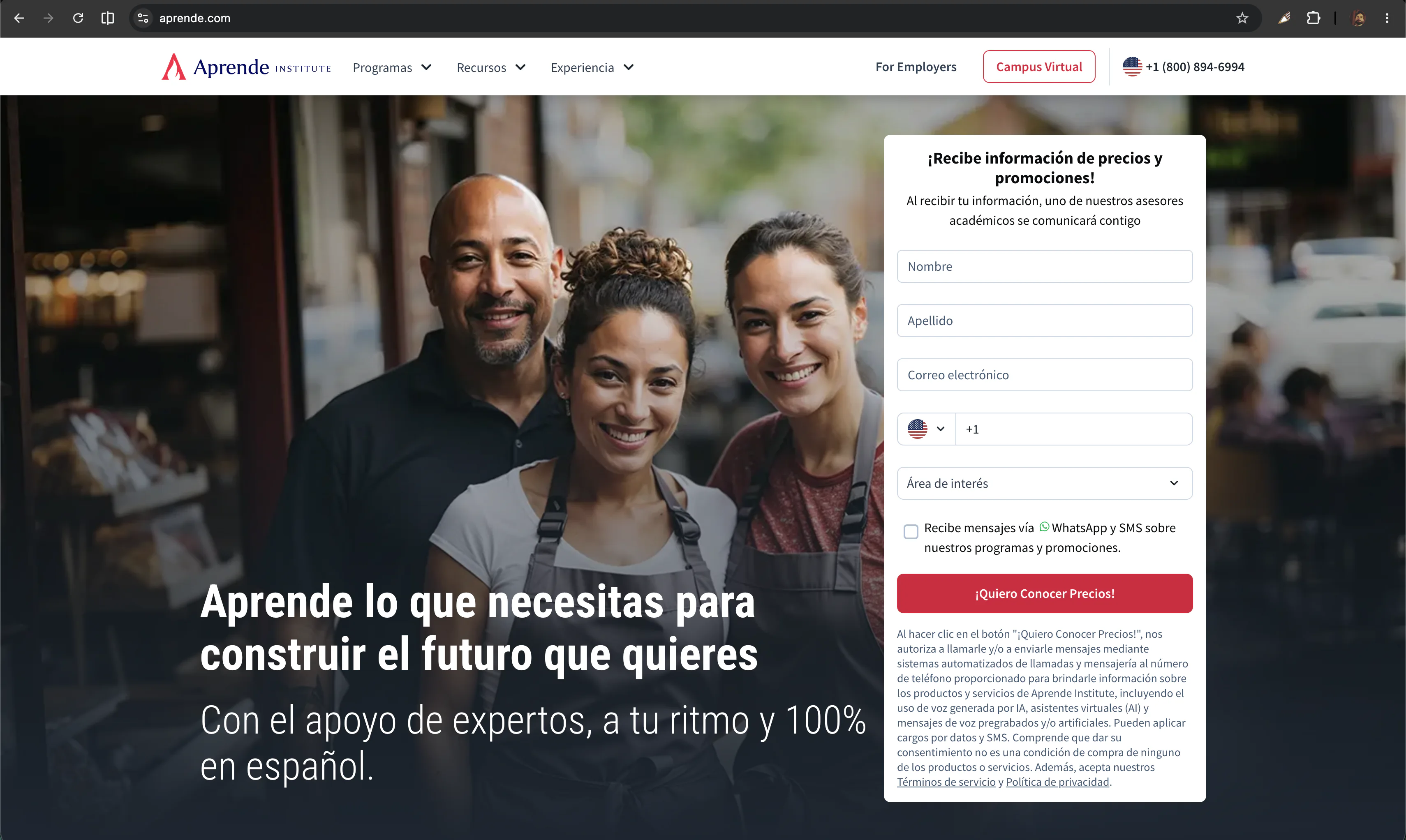
The original form asked for sales commitment before providing program details.
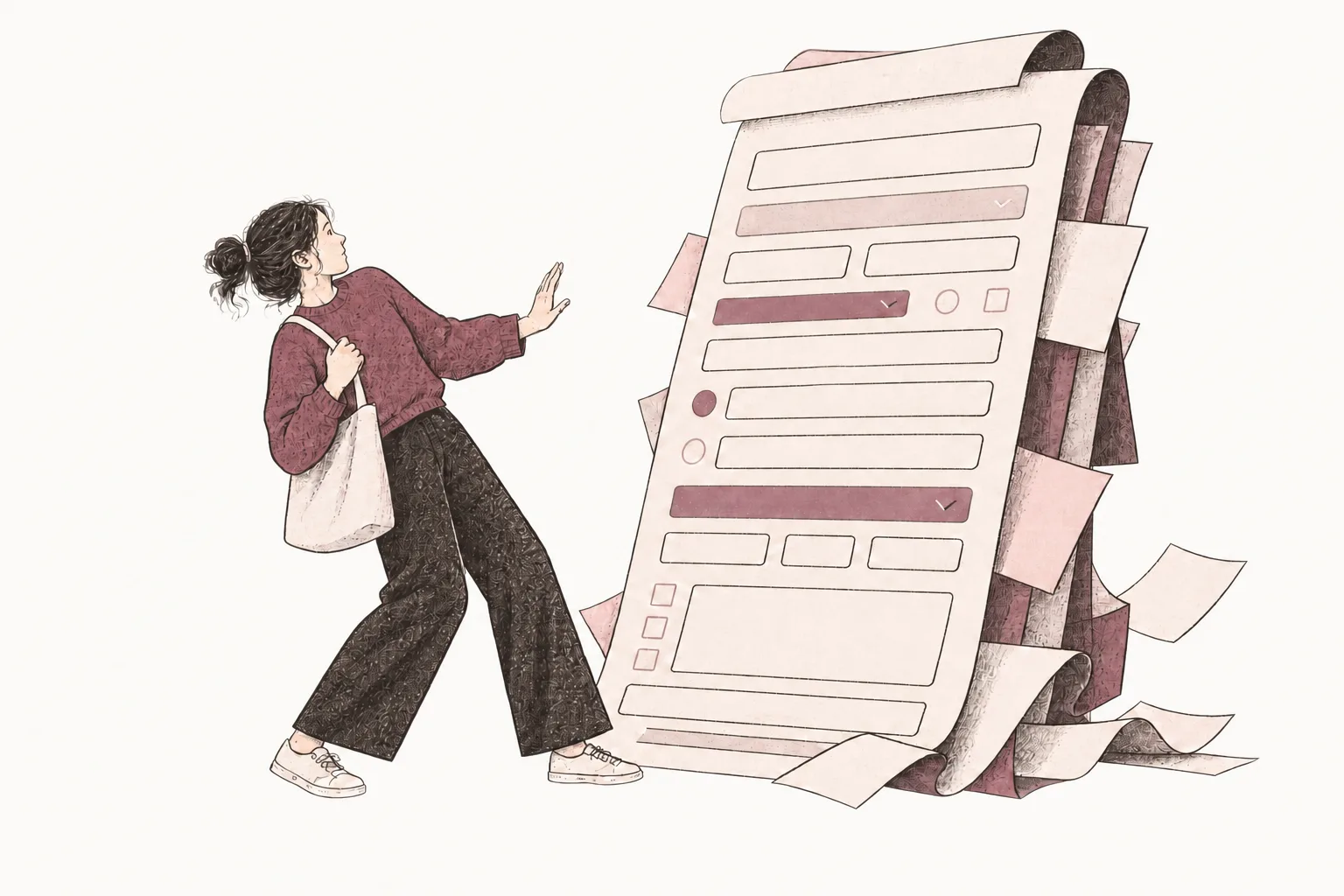
Before seeing useful information, people had to complete seven fields, choose a contact channel and accept phone and WhatsApp follow-up.
The form asked a browsing user to behave like a sales-ready lead.
At the same time, CAC was rising. We needed to get more from existing traffic without buying more media or building a new product surface.
02 · Evidence
Interviews revealed fragile trust. The test still had to show what changed behavior.

We ran ten in-depth interviews with people who had spoken with Aprende for more than ten minutes but had not enrolled. They came from wellbeing, beauty, entrepreneurship and trade programs. We were not evaluating a screen: we wanted to understand what they were trying to change in their lives and where the offer stopped making sense.
“I’m very, very distrustful because everything here is a scam.”
“I got overwhelmed. They offered me one thing, then another. It felt like an auction.”
“I became suspicious when they started telling me everything I could achieve with just one online program.”
Research did not prove that the phone field caused abandonment. It showed fragile trust and resistance to sales pressure. We used the A/B test to learn whether reducing the first commitment would change behavior.
03 · Exploration
I explored richer flows, then chose the test that isolated one variable.
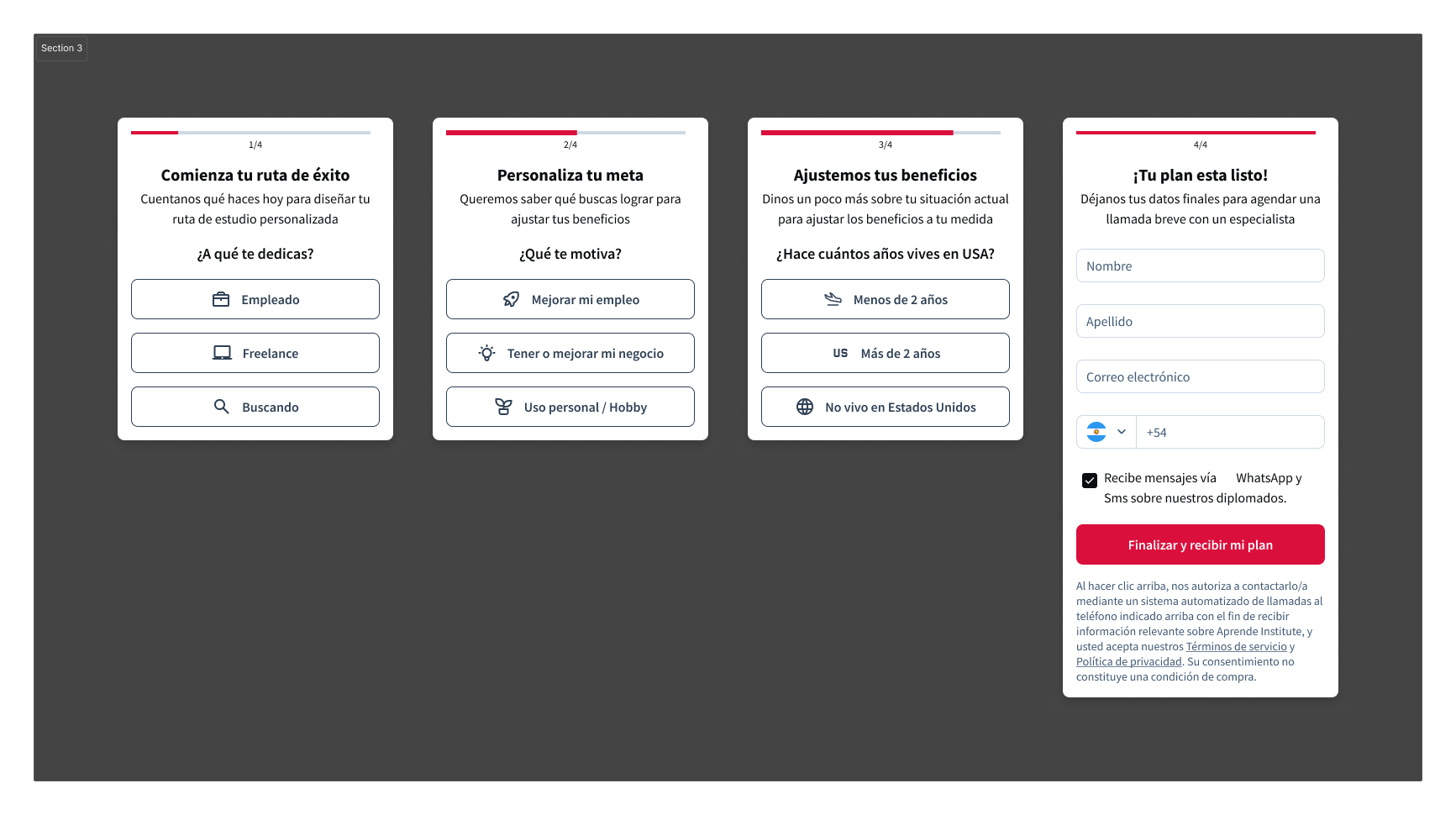
In Figma, I tested different ways to lower the barrier without losing a useful business signal. The quiz added context and personalization. The progressive version gathered richer data. Both added steps and mixed several hypotheses together.
Hypothesis
Ask for email first to capture more MQLs without losing people who would continue to SQL.
04 · Solution and test
Email first. Phone only for people ready to talk.
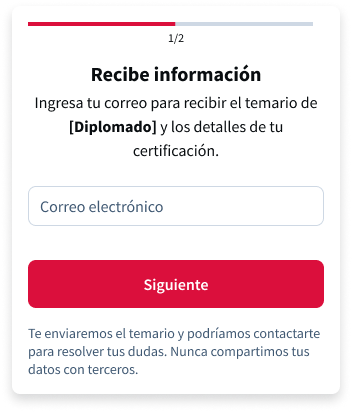 Door 1 · I want to know moreEmail is enough to receive information and become an MQL.
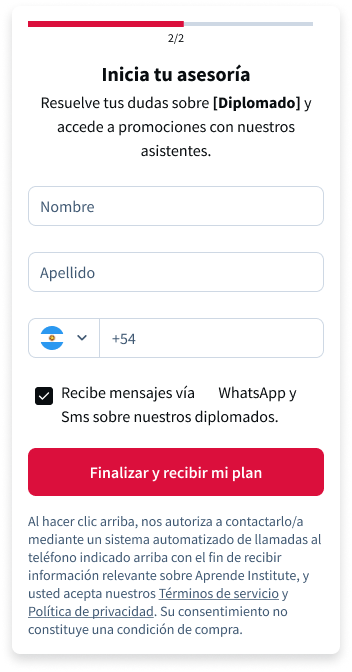 Door 2 · I am ready to talkPeople who want immediate contact can continue and share more.
Hypothesis
Would asking only for email first increase qualified leads without losing people who were ready to talk to sales?
I aligned implementation with the acquisition PM and development. Control and test received comparable traffic from the same UTM sources.
05 · Results
Marketing-qualified leads grew 35%. Sales-qualified conversion held steady.
The test does not prove that the first step increased trust as an attitude. It proves something more concrete: lowering the initial commitment changed behavior without damaging the sales-ready group.
What happened after the test: capturing the email only mattered if follow-up turned interest into an opportunity. I redesigned the new-MQL email sequence twice; journey-attributed sales grew from $3.5K to $7K.
How the MQL email sequence workedVisual redesign
$3.5K9 sales in the first monthContent and sequence
$7K2× sequence-attributed sales06 · Learning
Conversion was a progression of intent, not a binary decision.

Email and phone were not simply two contact fields: they represented different decisions. The product needed to recognize each level before asking for the next one.
Other projects