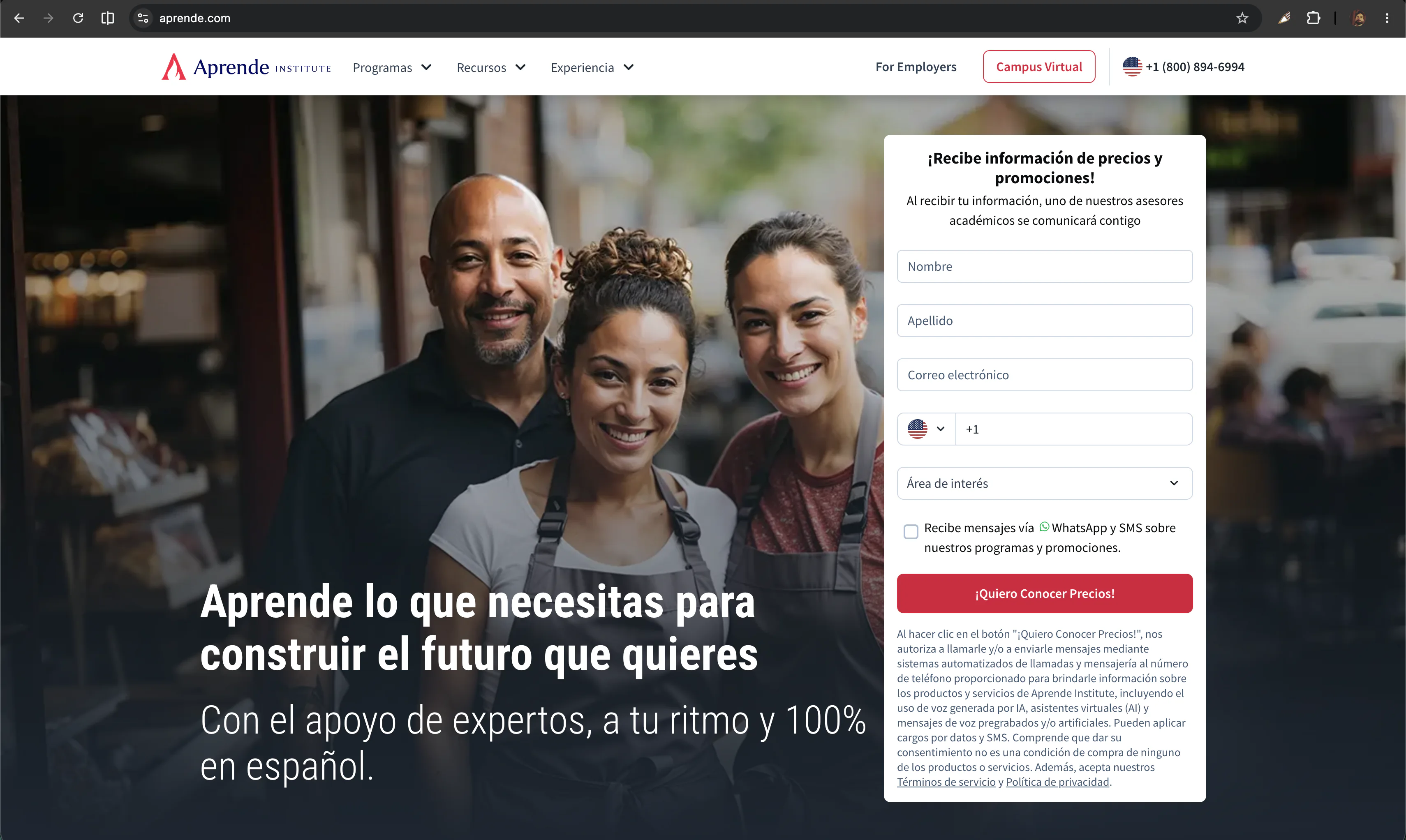
Aprende Institute · Activation
Moving booking into the product increased first-class activation 2.6×.
Premium students had already paid for a private class, but the product handed booking off to the call center. I moved that step into Campus and 15-day activation increased from 9% to 23%.
The gap
Only 9% booked the class they had already paid for

Aprende Boost · Premium tier with personalized feedback and 30-minute 1:1 classes
The purchase happened inside the product. Booking did not. After paying, students had to wait for or call the call center to use the benefit they had just bought. After 15 days, 91% still had not booked.
The decision
Treat booking as activation, not follow-up
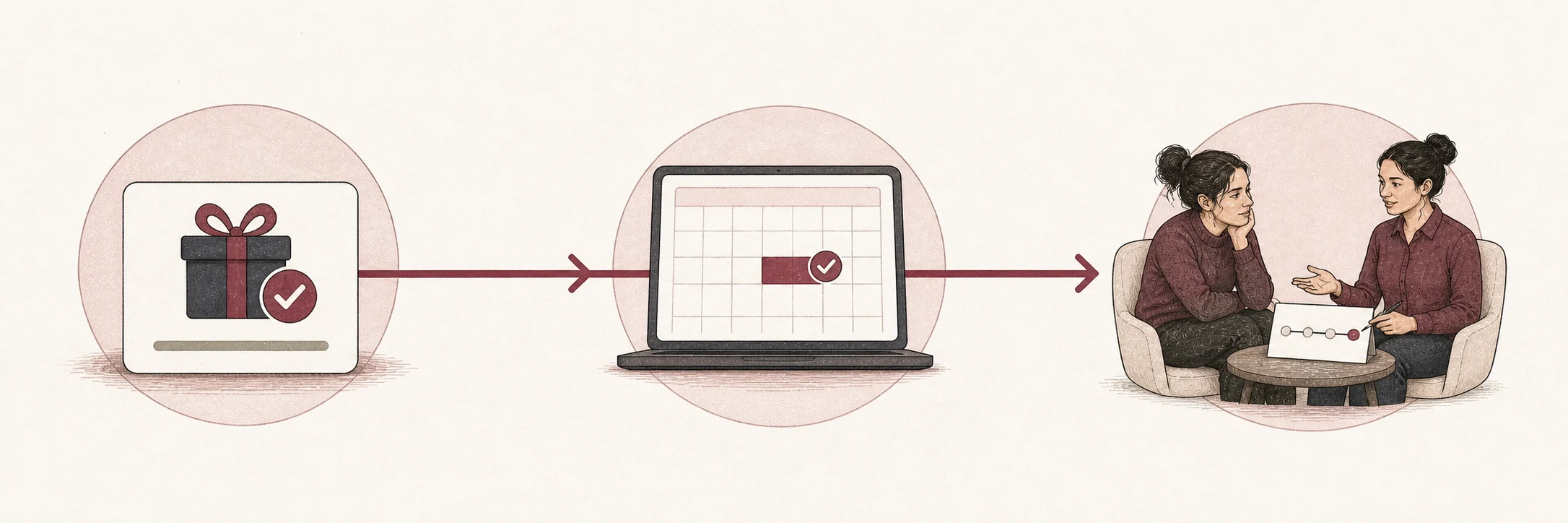
Internal analysis showed that attending the first class was associated with higher LTV and a +3pp NPS lift. That changed the frame: booking was not an administrative task. It was the step that turned purchase into value.
A reminders-only solution would preserve the same handoff. The decision was to continue the experience inside Campus while intent was still high.
The experience
Continue the product until the class was booked
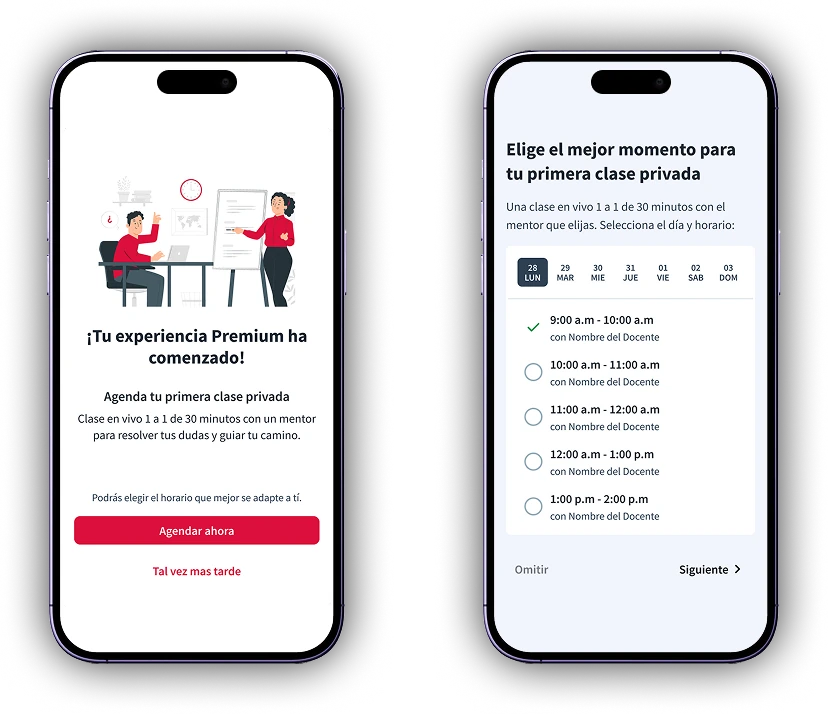
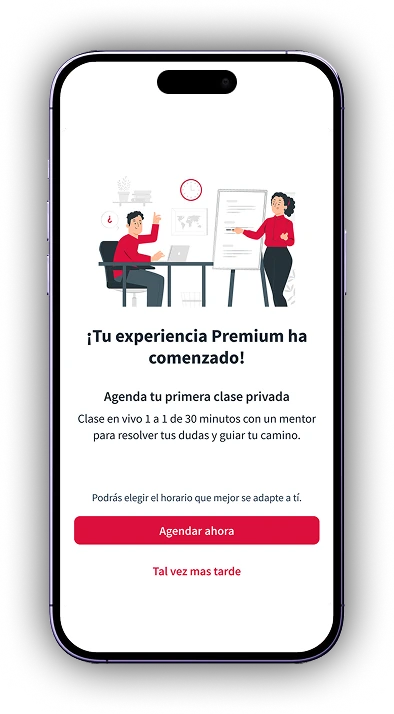
From day 2, on the next eligible login, Campus presented the first class as an assessment with a concrete outcome. The flow reduced booking to the two decisions that mattered: day and time.
 The trigger
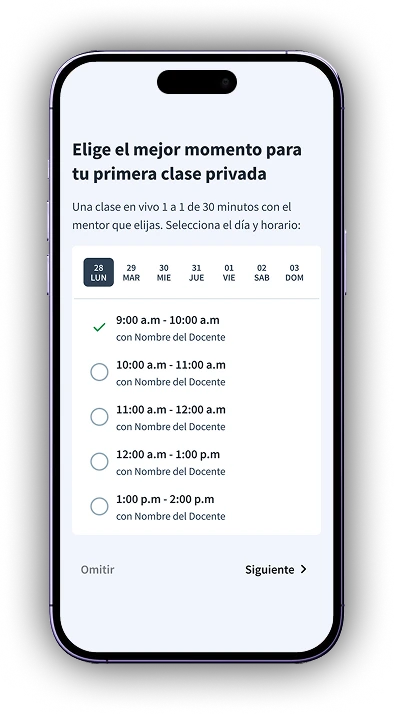 Choose day and time
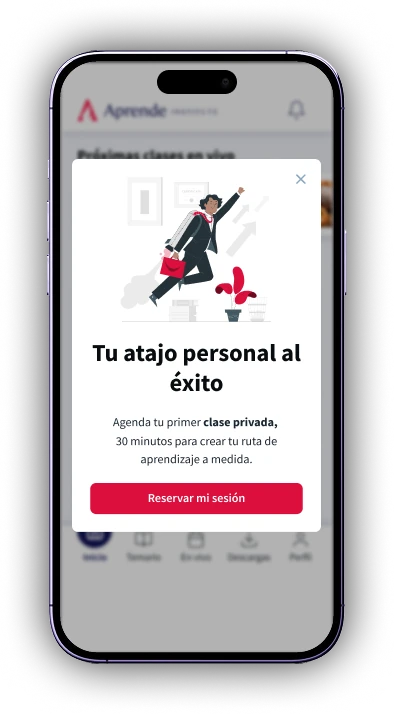
It did not sell an appointment. It promised an outcome: resolve your questions and leave with a roadmap.
The system
One booking destination, multiple ways back
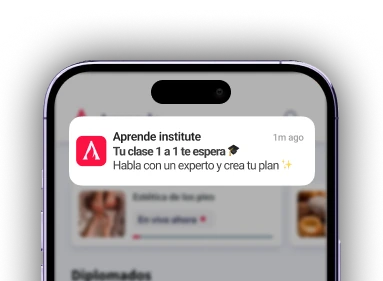
If the first visit did not end in a booking, email, Appcues and push returned the student to the same experience. The channels changed; the destination did not.
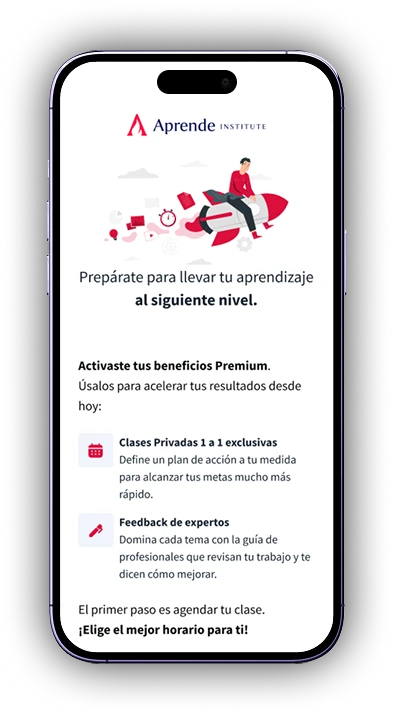
Everything downstream stops. The sequence only continued for students who still had not booked.
I also designed for the places where the path could break: an existing booking, a non-Premium account or no available time slots.
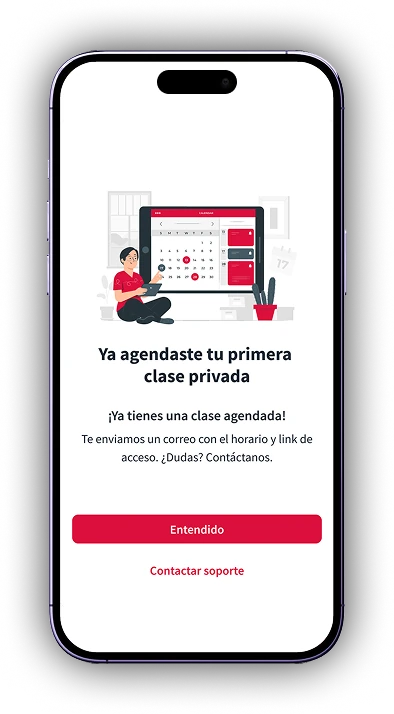 Already bookedDeeplink entry with a class already scheduled.
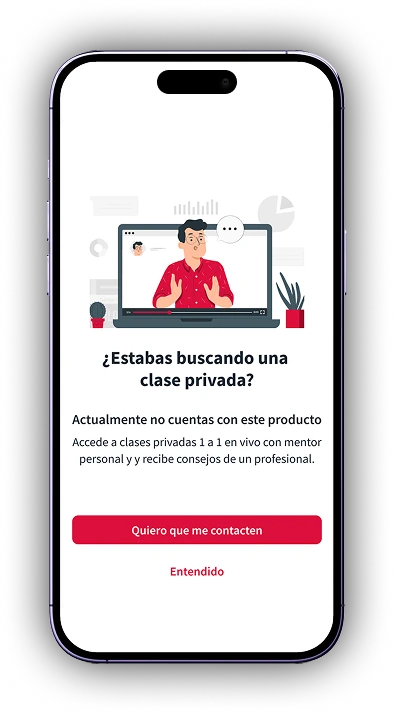 Non-PremiumDeeplink entry without the Premium product.
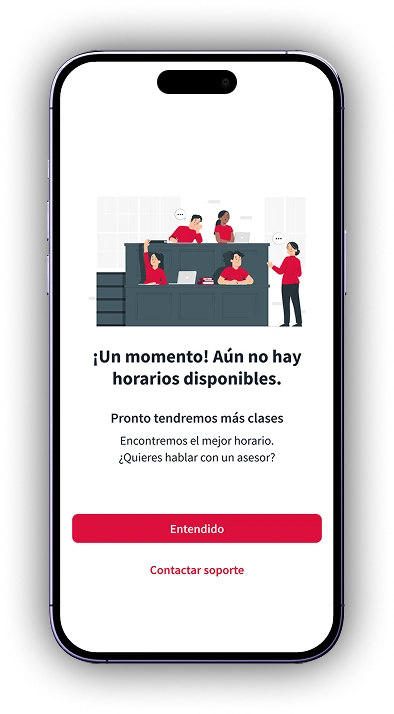 No availabilityNo slots to offer: support takes over.
Impact
2.6× activation at launch
This was a pre/post comparison, not an A/B test. The rollout did not allow a clean control, so the result shows a strong, sustained signal but does not prove causality on its own.
The primary comparison was consistent: 15-day activation increased from 9% to 23%, and the flow remained the default path.
Learnings
The right moment beats the louder message
Timing mattered more than copy
Putting booking directly into the student’s path during the first days after purchase had more impact than adding another reminder.
Reactivation needs an exit condition
Once someone booked, every downstream message stopped.
Attribution has limits
This was a pre/post rollout, and the +11% LTV signal remained directional at p = 0.12.